
Sussex County Court Records After Arrest
After a Sussex County jail arrest, the record trail splits. The jail side shows custody status, booking, transport, housing at Morris County Correctional Facility, and any facility payment handling. The court side shows the charges filed in New Jersey courts, the case number, hearings, motions, warrants, release orders, and disposition. The prosecutor side can include charging decisions, discovery, victim and witness records, and trial file material. That split matters because a person can be booked on one charge phrase and later face amended, downgraded, dismissed, or indicted charges in court.
The Sussex County Prosecutor's Office is led by Prosecutor Daniel M. Perez, the county's chief law-enforcement officer. The office reviews indictable matters after arrest, presents cases to the grand jury, handles plea and trial work, and keeps prosecutor records at 19-21 High Street in Newton. The prosecutor's Grand Jury and Trial Unit handles matters such as aggravated assault, burglary, theft, forgery, fraud, eluding, and environmental crimes. For custody and booking details, use Sussex County jail inmate records; for booking photos, use Sussex County jail mugshots. Court records after a jail arrest are the filed criminal case record, not a promise that a public mugshot or online roster exists.
The Morris/Sussex Vicinage and Sussex County Judicial Center are the local court context for many filed Sussex criminal cases. Older files, certified copies, and records not visible online may require contact with the court records room instead of a web search.
Find Sussex County Court Records After Arrest
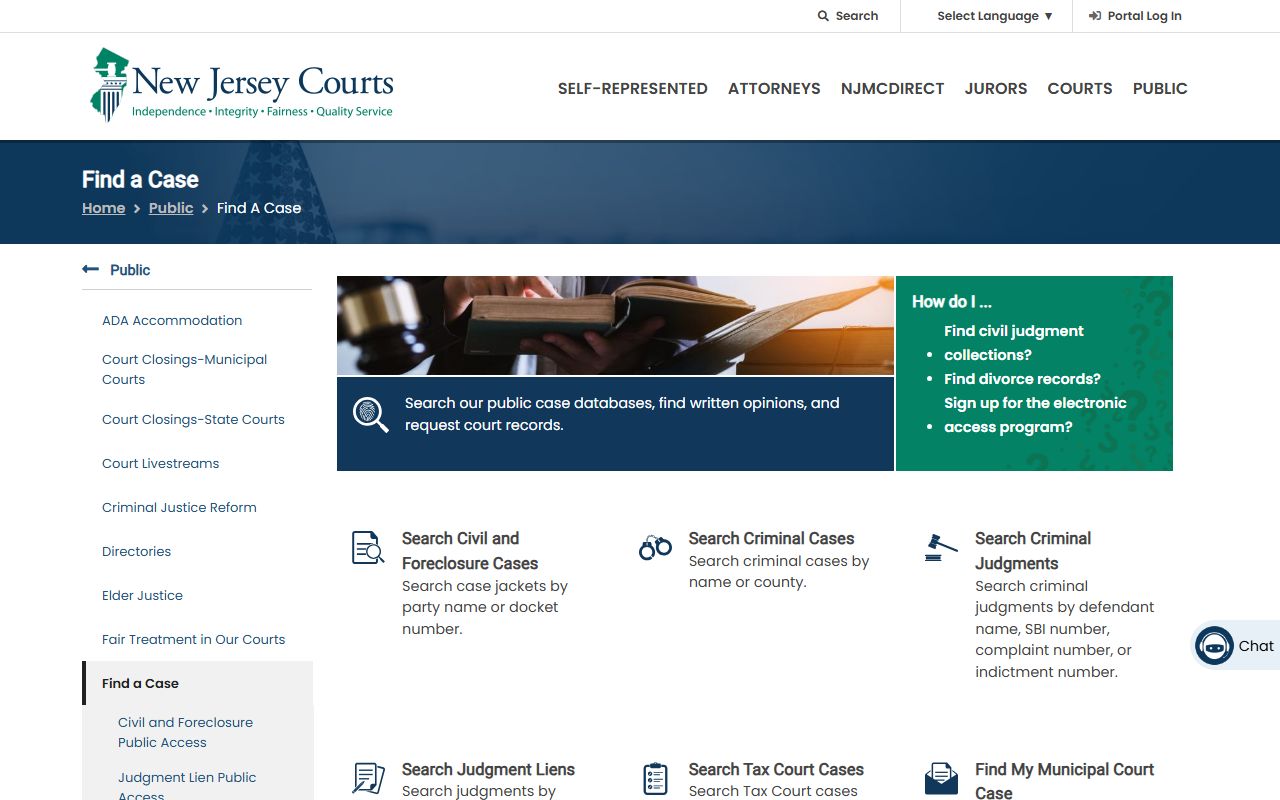
New Jersey Courts directs public users through its Find a Case hub. For indictable criminal matters, the relevant public system is PROMIS/Gavel Public Access. The research inspection found that the direct portal can block static access, but official search text identifies the main search paths: defendant name, indictment or accusation number, and CDR or complaint number. Select Sussex County when the form offers a county field and use only one search type at a time when possible.
- Gather the defendant's full legal name, date of birth if known, arrest date, arresting agency, and any complaint, CDR, indictment, or accusation number from court papers.
- Open PROMIS/Gavel Public Access and choose the search type that matches the best information available.
- Search by defendant name and Sussex County when no case number is known.
- Open the matching case and read each charge entry, status, hearing entry, warrant notation, and disposition field carefully.
- Contact the NJ Courts records room for certified copies, older files, or records that do not display in the public portal.
Municipal complaints, disorderly persons matters, traffic-related arrests, and some lower-level cases may not appear the same way as Superior Court indictable cases. Those records may require a municipal court search or direct court contact. Prosecutor-held records follow the Sussex County Prosecutor public-records route, but active criminal investigatory records can be withheld or redacted under New Jersey public-access law.
| PROMIS/Gavel Field | Type | Required | Use |
|---|---|---|---|
| Last Name | Text | Required for name search | Use the defendant's legal last name. |
| First Name | Text | Form dependent | Add the first name to narrow common names. |
| Middle Initial | Text | Optional | Helpful when court snippets show an initial field. |
| Indictment/Accusation Number | Text | Required for that search | Use the number from Superior Court paperwork. |
| CDR/Complaint Number | Text | Required for that search | Use the complaint number from charging papers. |
| County | Dropdown | Varies | Select Sussex for Sussex County matters when available. |
The NJ Courts Find a Case page is the official starting point for public case databases.
Sussex County Charging Documents
Formal charges after arrest are not always the same words shown at booking. Police may file an initial complaint. The Sussex County Prosecutor may review and change an indictable charge. A grand jury may return an indictment. New Jersey also uses an accusation when indictment is waived in some cases. Each document can shape the court record after a jail arrest, so the document type should be read before treating a charge entry as final.
| Document | Who Uses It | What It Does | Search Clue |
|---|---|---|---|
| Complaint or CDR | Police, court, or prosecutor | Starts or records the initial criminal accusation after arrest. | CDR or complaint number. |
| Accusation | Prosecutor and court | Formal charge used when indictment is waived. | Accusation number in PROMIS/Gavel. |
| Indictment | Grand jury and prosecutor | Formal grand-jury charge in a Superior Court criminal case. | Indictment number in PROMIS/Gavel. |
A charge can be pending, amended, downgraded, dismissed, indicted, disposed, or resolved by conviction. A conviction means a guilty plea or finding of guilt. A charge alone is only an accusation. This distinction is essential for anyone reading Sussex County court records after an arrest.
Sussex County Charge Status Records
Charge status is the best clue for where a Sussex County criminal case stands. A pending entry means the charge has not reached a final outcome. An amended or downgraded entry means the charge changed. A dismissed entry means that count ended without conviction. An indictment means a grand jury returned formal charges, while an accusation means the defendant proceeded without indictment. Disposed means the court case or count has an outcome.
| Status | Plain Meaning | How to Read It |
|---|---|---|
| Pending | The filed charge is still open. | Check the next listed court event. |
| Amended | The charge text or code changed. | Compare newer entries to the booking charge. |
| Downgraded or Reduced | The severity was lowered. | Look for a new court level or amended count. |
| Dismissed | The count ended without conviction. | Confirm whether other counts remain active. |
| Indicted | A grand jury returned formal charges. | Use the indictment number for later searches. |
| Disposed | The case or charge has an outcome. | Review the disposition and judgment records. |
New Jersey Courts also provides criminal judgment access for judgments of conviction. That judgment database should not be confused with jail custody records, VINE notifications, or a prosecutor OPRA file.
Bond and Release Records
New Jersey's criminal justice reforms moved many release decisions away from a commercial bail-first model. Release may occur on recognizance, under nonmonetary conditions, after a court-authorized payment, or not at all if the court orders detention. Morris County Correctional Facility states that bails, fines, fees, and probation payments accepted at the facility must be paid by cash, money order, or cashier's check. The inspected official jail pages did not publish online bond amounts for Sussex inmates.
| Release Term | Meaning After Arrest |
|---|---|
| Recognizance or conditions | The court permits release without a money payment, often with required conditions. |
| Monetary bail or payment | A court-authorized amount may need to be paid in an accepted form. |
| Detention or remand | The person stays in custody by court order. Remand means held by the court. |
| Hold or detainer | Another county, state, federal, parole, probation, or immigration authority may block release. |
For adult Sussex County matters, call Morris County Correctional Facility to confirm whether a person is housed there, whether any payment may be accepted, and whether another hold exists. Then verify the case status through NJ Courts. A caller demanding immediate money to clear a warrant or bond should be treated with caution and verified directly with the sheriff, court, or police.
Warrants Before Sussex County Arrest
No official searchable Sussex County active warrant database was located in the inspected sheriff pages. The sheriff site includes a Wanted List navigation item, but the research did not capture a current searchable database. Warrants may still appear through court records, local police records, sheriff channels, or prosecutor files. A bench warrant is issued by a judge, often for missing court. An arrest warrant authorizes arrest. A search warrant authorizes a search, not a custody lookup.
Sussex County Sheriff's Office can be contacted for sheriff warrant or wanted-list questions, and local municipal police may hold local complaint or bench-warrant information. Federal warrants are handled through the U.S. Marshals District of New Jersey. If a warrant is executed and the person is held on a Sussex adult criminal matter, Sussex corrections transport functions connect to Morris County Correctional Facility housing. If the case is federal or immigration-related, use the BOP or ICE systems instead.
Charges vs Convictions
A Sussex County arrest, a court charge, and a conviction are three different things. An arrest means law enforcement took the person into custody. A charge means a formal accusation was filed in court. A conviction means a guilty plea or finding of guilt. Public databases may show all three at different points, so the status field and disposition should be checked before using a record as proof of outcome.
| Record Type | What It Means | What It Does Not Mean |
|---|---|---|
| Arrest | A person was taken into custody or booked. | It does not prove guilt. |
| Charge | A prosecutor, police officer, court, or grand jury filed an accusation. | It may later be changed or dismissed. |
| Conviction | The case ended in a guilty plea or finding of guilt. | It does not describe every initial arrest allegation. |
Sealed and Expunged Records
New Jersey OPRA makes many government records available unless an exemption applies, but juvenile records, active criminal investigatory files, security-sensitive details, medical information, and some personal identifiers can be restricted. NJ Courts also provides expungement resources. An expungement order can seal, extract, or isolate eligible records under New Jersey procedure, but eligibility depends on the offense, disposition, timing, and prior record.
| Access Limit | Public Effect | Official Route |
|---|---|---|
| Sealed or restricted | Public viewing is limited, but some official access may remain. | Verify through the court that sealed the record. |
| Expunged | Eligible records are isolated from ordinary public access by court order. | Use NJ Courts expungement resources. |
| Juvenile record | Not handled like adult public court or jail records. | Parent, guardian, counsel, or court channels. |
| Active investigation | Records may be withheld or redacted. | Agency OPRA response or court order. |
For Sussex County court records after a jail arrest, OPRA requests should go to the agency that owns the record. Sheriff transport or corrections records may go to Sussex Sheriff OPRA. Facility housing records may go to Morris Sheriff OPRA. Prosecutor records go to the prosecutor's public-records route. Formal filed charges and dispositions come from NJ Courts.
Record Use Limits
Casual public lookups are not the same as a compliant background check. New Jersey court records after arrest can help identify a case, but they may be incomplete, restricted, later amended, or out of date. Employers, landlords, insurers, lenders, and other regulated users must follow the Fair Credit Reporting Act and any state-law requirements that apply to their use of criminal-history information.
Important: Do not use informal Sussex County arrest or court lookups for credit, employment, housing, insurance, or other FCRA-covered decisions.